The rules for using a car seat on a plane are not as straightforward as you’d expect. US airlines, European airlines, and Australian airlines all follow different aviation authorities with different rules. Here’s what matters.
How do US airline rules differ from international airlines?
The biggest thing to understand: US airlines are governed by the FAA. Non-US airlines follow their own country’s aviation authority (CAA in the UK, EASA in Europe, CASA in Australia). The rules differ significantly.
US airlines (FAA): Must allow any car seat labelled “This restraint is certified for use in motor vehicles and aircraft.” They cannot refuse your approved seat if you’ve purchased a ticket. If it doesn’t fit in one seat, they must find you another seat in the same class. This applies to American Airlines, Delta, United, Southwest, and JetBlue.
European airlines (EASA/CAA): Generally allow car seats but each airline sets its own rules on top of EASA guidelines. Some restrict by age (Emirates caps at 36 months, for example). Ryanair has a 43cm width limit that rules out many seats. British Airways and Lufthansa are more accommodating. Lap belts for infants are permitted, unlike US airlines. Flight crew may not be familiar with car seats on planes since they’re rarely seen on non-US flights.
Australian airlines (CASA): Accept Australian AS/NZS 1754 seats with the aircraft-use label, plus FAA and EU approved seats, subject to conditions. Qantas and Virgin Australia both accept these. Top-tether seats that need three-point attachment won’t work with aircraft lap belts.
For a deeper dive on what the labels mean, see our car seat certifications guide.
What label should your car seat have?
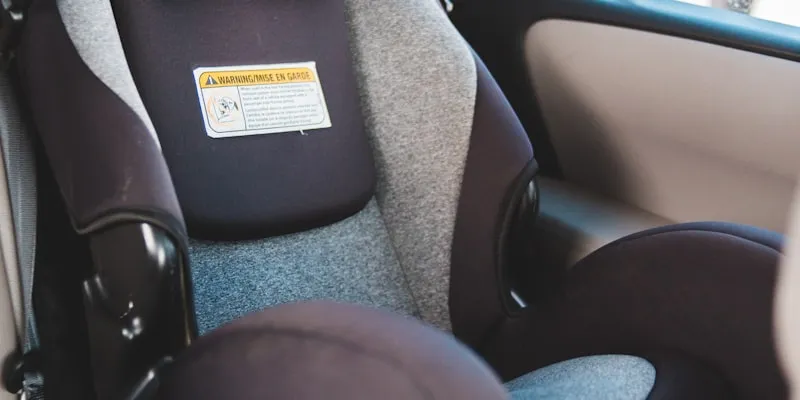
Every approved car seat has a label. For US seats, look for red text reading “This Restraint is Certified for Use in Motor Vehicles and Aircraft.” European seats show ECE R44 or R129 markings. Australian seats show AS/NZS 1754.
Having the right label is necessary but not sufficient. Your airline may have additional restrictions on age, weight, or facing direction. Always check your specific airline’s policy before you fly.
Which car seats rank best for air travel?
Our car seat rankings score every seat by airline compatibility, weight, and width (must fit in a ~43cm airplane seat). Here are the top picks.
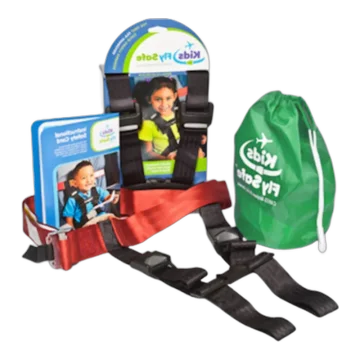
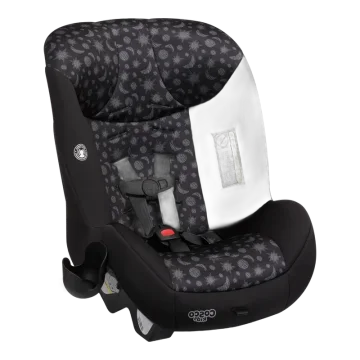
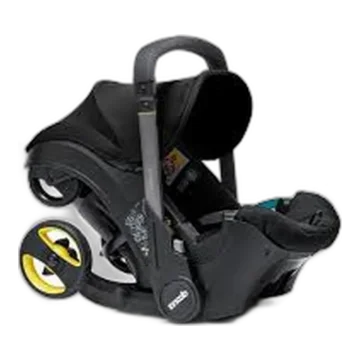
- AmSafe CARES (check price) ranks #1. Not a car seat but an FAA-approved harness at just 0.45 kg. Works for kids 10-20 kg who can sit upright. See the CARES section below.
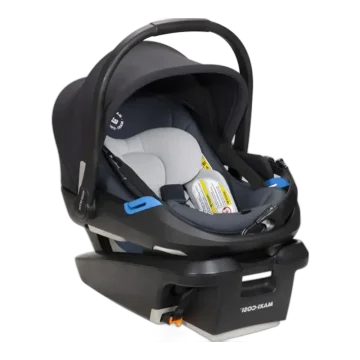
- Maxi-Cosi Coral XP ranks #2. At 2.3 kg, it’s the lightest infant seat in our database with strong airline compatibility.
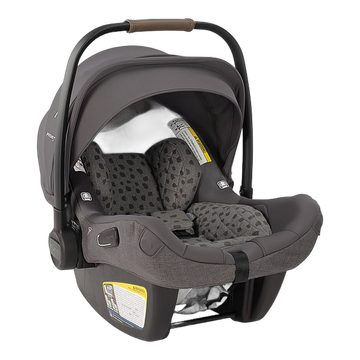
- Nuna PIPA Lite RX ranks #3. Another lightweight infant seat at 3.1 kg with wide airline acceptance.
- Cosco Scenera NEXT (check price) ranks #4. The classic budget travel seat at 3.17 kg. Light, cheap enough that damage isn’t devastating, FAA approved.
- Doona Car Seat & Stroller (check price) doesn’t rank as high due to its weight, but doubles as a stroller, eliminating one piece of gear. Incredibly convenient at airports.
See the full ranked list on our car seat rankings page.
Will your car seat fit in a plane seat?
Airplane seat widths vary. Economy seats are typically 42-44 cm (16.5-17.3 in) between armrests. If your car seat is wider than that, it won’t fit. The FAA says a car seat should be no wider than 16 inches to fit most aircraft, but finding one that narrow is genuinely difficult.
Measure your car seat at the point where the armrest would sit, not at the widest point of the shell. That’s the measurement that matters.
Use our car seat rankings to check the width of your specific seat, or the Baby Travel Gear Checker to cross-reference your car seat against your airline’s requirements.
Can you use a rear-facing car seat on a plane?
This trips people up. US airlines allow both forward and rear-facing seats. Many non-US airlines restrict rear-facing to infants under a certain age or weight. Qantas allows rear-facing for infants under 9 kg. Emirates allows it up to 6 months.
The car seat must face the same direction as the aircraft seat it’s installed on. A rear-facing car seat goes on a forward-facing aircraft seat, facing the back of the plane. It cannot go on a bulkhead row.
Do you need to buy a seat for your child?
If you want to use a car seat on a plane, your child needs their own ticket. There’s no way around this. Some airlines offer discounted child fares. If your child is under 2 and you haven’t bought a seat, you can ask the airline if they’ll let you use an empty seat, but it’s not guaranteed.
What is the CARES harness?
The AmSafe CARES harness (check price) is an FAA-approved alternative that weighs under 500g. It’s a harness that attaches to the airplane seat and works for children 10-20 kg (22-44 lbs) who can sit upright. It’s accepted by most airlines and eliminates the problem of lugging a heavy car seat through the airport. The trade-off: it doesn’t provide the same level of protection as a full car seat, and you still need a separate car seat at your destination.
Bottom line
- Check your car seat’s label for aviation approval (see our certifications guide)
- Check your airline’s specific policy (use our Baby Travel Gear Checker)
- Measure your car seat width against the plane seat width
- Buy a ticket for your child
- Print your airline’s car seat policy and bring it with you
Compare airline car seat policies on our airline rankings page.
As an Amazon Associate, we earn from qualifying purchases.