Inflatable sleep devices turn an economy seat into a flat(ish) bed for kids. Parents love them. Airlines are split on whether to allow them. Here’s the current state.
What are inflatable airplane sleep devices?
These are inflatable cushions, ride-on suitcases, or leg-rest pillows that fill the gap between your child’s seat and the seat in front, creating a flat surface for them to lie on. Our sleep device rankings score every device by airline endorsement (90% of the score), weight, and packed size. The top picks:
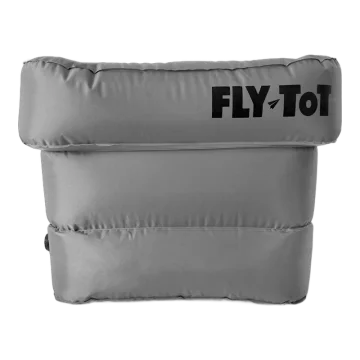
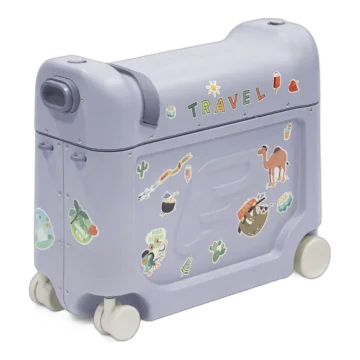
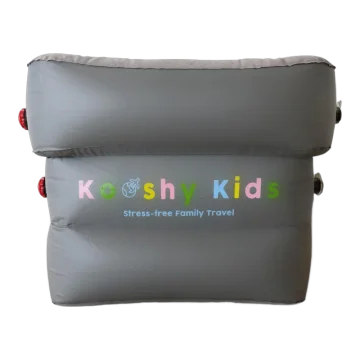
- Fly Tot (check price) - inflatable cushion at just 0.87 kg, one of the most airline-endorsed devices
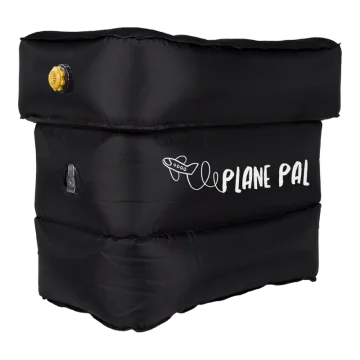
- Plane Pal (check price) - inflatable cushion at 1.3 kg, the original and most widely approved, supports kids up to 90 kg
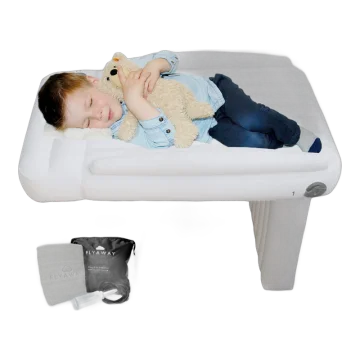
- Flyaway Kids Bed - inflatable cushion at 1.3 kg with a compact pack size
- JetKids BedBox (check price) - ride-on suitcase that converts to a bed extension, the only one that doubles as carry-on luggage
- Kooshy Kids Premium Kooshion (check price) - leg-rest style cushion
There are also budget foot rests and hammock-style devices, but these are less commonly endorsed by airlines. See the full ranked list on our sleep device rankings page.
Which airlines allow sleep devices and which ban them?
Airlines fall into three camps:
Allow them (with restrictions): Virgin Australia, Air New Zealand, Jetstar, Emirates, and several others let you use approved devices, but only when the seatbelt sign is off. You must fully deflate during taxi, takeoff, and landing. The valve must face the aisle. They can’t affect other passengers.
Don’t allow them: Qantas and British Airways ban all inflatable sleep devices. Several other airlines have blanket bans too.
Unclear: Some airlines haven’t published a clear policy. If your airline’s policy is unclear, call them before you fly.
Check the exact policy for your airline in our Baby Travel Gear Checker - select your airline and look at the sleep device section. You can also compare sleep device policies across all airlines on the airline rankings page.
What is the difference between “approved” and “allowed”?
There’s a difference. Some airlines name specific products in their approved list (e.g. “Plane Pal, JetKids BedBox, and Fly Tot are approved”). Other airlines allow sleep devices generally without naming specific brands.
If your airline names specific products, stick to those. Showing up with an unapproved brand may mean the crew says no, even if the airline “allows” sleep devices in general.
What restrictions apply to airplane sleep devices?
Even on airlines that allow sleep devices:
- Seatbelt sign off only. You must deflate during taxi, takeoff, landing, and turbulence. On a bumpy flight, you might barely use it.
- Inflate valve faces the aisle. For quick deflation in an emergency.
- Can’t block other passengers. If the person in front can’t recline, the crew may ask you to remove it.
- Economy only. Business and first class seats have different configurations.
- Your child must still be buckled. The seatbelt goes around them while they’re lying on the device.
Are airplane sleep devices worth it?
For long-haul flights (8+ hours) with a child aged 2-6, yes. A child who actually sleeps on a plane changes the entire flight experience. For short flights or older kids, probably not worth the hassle of inflating, deflating, and the risk of your airline saying no.
The devices weigh 1-3 kg and pack down to backpack size. Not a huge burden to carry.
Before you buy
- Check if your airline allows them using our Baby Travel Gear Checker
- If you’re flying multiple airlines on one trip, use the Baby Travel Gear Checker to check all legs
- Browse all options on our toddler airplane beds rankings to compare features and airline approval
- Buy from the brand’s official site so you can return it if your airline doesn’t allow it
As an Amazon Associate, we earn from qualifying purchases.